Garden Clearance Manor Park — Recycling and Sustainability
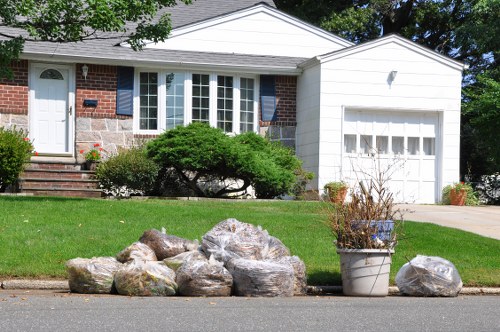 Garden Clearance Manor Park is committed to creating an eco-friendly waste disposal area and a truly sustainable rubbish area for Manor Park residents. We combine practical clearance work with a focus on circular economy outcomes: careful separation on-site, prioritised reuse, and materials diverted to authorised processing centres rather than landfill. Our approach to garden clearance in Manor Park places environmental impact at the heart of every job, from small garden tidy-ups to larger clearance projects.
We set measurable targets for continuous improvement. The local garden waste clearance team is working towards a recycling percentage target of 70% by 2028 for all garden and soft household waste collected on clearance jobs. This target covers reuse, recycling and composting rates for green and dry recyclables and is supported by regular audits. By tracking diversion rates we ensure that the sustainable rubbish area we operate in Manor Park gets steadily greener each year.
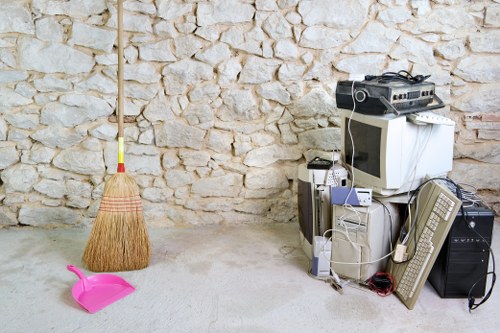 Many boroughs in East London have robust waste separation schemes and Manor Park clearance activity aligns with those systems: organic and garden waste is segregated for composting, dry recyclables (paper, card, plastics, glass, and metals) are sorted for local processing, and inert materials like concrete or bricks are prepared for recycling. We coordinate with local transfer stations and municipal depots to ensure compliant handover of materials and to optimise the route from collection to processing.
Practical partners: transfer stations, depots and charity networks
Our sustainable rubbish area model depends on strong logistical links. We work with a network of local transfer stations and council-run depots to streamline materials handling and reduce journeying. Using nearby transfer stations reduces mileage and ensures faster turnaround to approved recyclers, composting sites and recovery facilities. The operational map of Manor Park garden clearance services prioritises transfer locations that accept segregated loads and that record recycling tonnages.
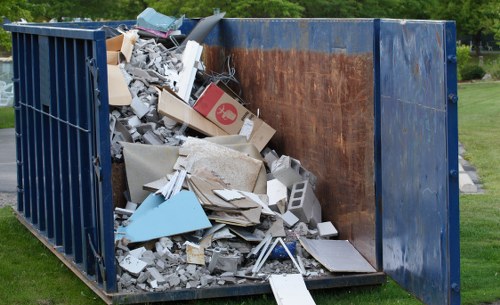 We also maintain formal partnerships with a range of community and charity organisations to maximise reuse before recycling. Items in good condition are separated and offered to registered charities and local reuse hubs. Typical partnerships include local furniture banks, community redistributors and social enterprises that accept tools, planters, timber and salvageable fixtures — extending the life of goods that would otherwise be discarded.
Key elements of our partnership approach include:
- Timely donation routing so reusable items reach charities quickly.
- Documentation and tracking to count donated tonnes toward sustainability targets.
- Coordinated collections with charity vans or reuse networks to avoid duplicate journeys.
Low-carbon transport and materials processing
We have invested in a low-emission fleet to support the eco-friendly waste disposal area model. Our low-carbon vans include electric and hybrid vehicles for short urban routes and modern Euro 6 engines for heavier loads. Route optimisation software reduces idling and mileage, helping us aim for a 40% reduction in collection-related transport emissions compared with a conventional fleet baseline. The Manor Park clearance fleet is also tuned to operate efficiently within borough clean-air zones.
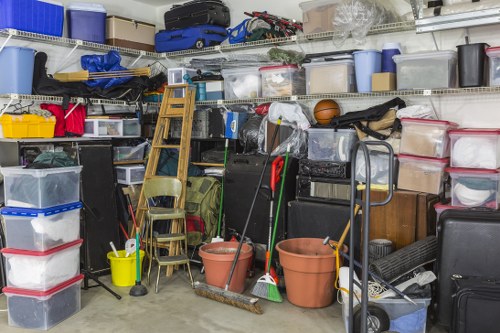 For actual material processing, green waste collected through Manor Park garden clearance schemes is prioritised for local composting and chipping facilities that produce mulch, soil improver and biomass feedstock. Wood, timber and pallet material that is unsuitable for reuse is separated for mechanical recycling or energy recovery where appropriate. Hazardous items, batteries and contaminated waste streams are segregated and sent only to authorised treatment centres, never mixed into the sustainable rubbish area stockpile.
 Community engagement is central to sustaining these efforts. We work alongside borough recycling campaigns and local civic groups to encourage correct on-site separation during clearances. Education and clarity about what can be donated, what should be recycled, and what must be disposed of safely reduces contamination and raises overall recycling rates. Through coordinated efforts — transfer stations, charity partners, and a low-carbon collection fleet — Manor Park garden clearance services aim to deliver a practical, measurable contribution to the local circular economy.
Summary of commitments: prioritise reuse through charity partnerships, meet or exceed the 70% recycling target by 2028, use local transfer stations and council depots for efficient processing, and run a low-emission fleet to keep the sustainable rubbish area low-carbon and compliant with borough policies.