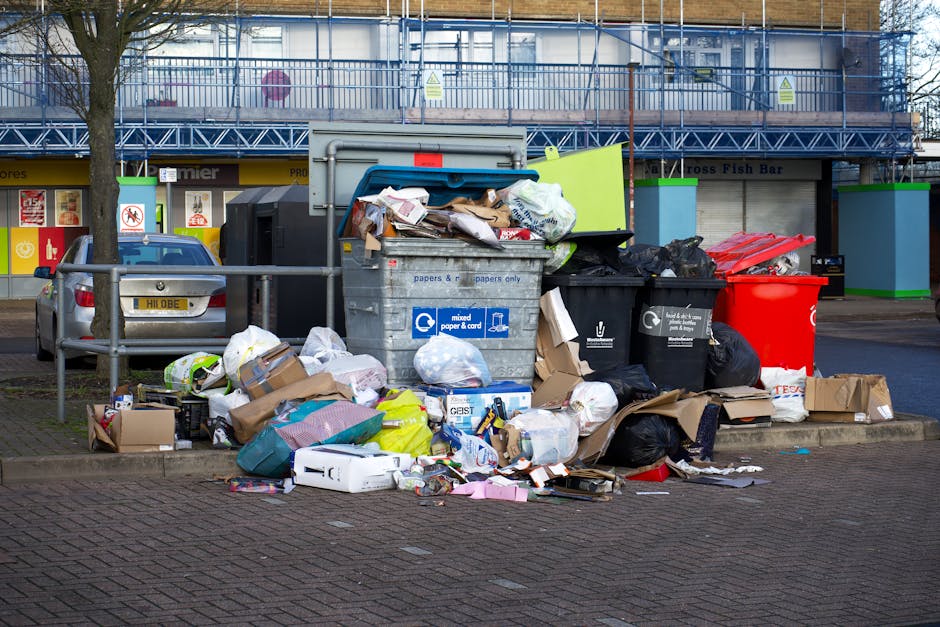
Common Mistakes When Booking Rubbish Removal in Manor Park
Booking rubbish removal in Manor Park should feel simple: you choose a collection time, the waste disappears, and your space is clear again. In reality, it can go wrong in surprisingly ordinary ways. The most common mistakes when booking rubbish removal in Manor Park usually come down to rushed decisions, vague quotes, and not checking what is actually included. That is where extra charges, delays, and stress creep in.
If you are clearing a flat after a move, dealing with a garden tidy-up, or getting rid of builder's rubble, the details matter. A five-minute phone call can save you a lot of hassle later. This guide walks through the practical mistakes people make, why they matter, and how to book with more confidence. No fluff. Just the bits that tend to trip people up.
Why Common Mistakes When Booking Rubbish Removal in Manor Park Matters
Rubbish removal is one of those jobs that looks straightforward until the day arrives and reality intervenes. A sofa is heavier than it looked. A pile of mixed waste is bigger than expected. The van cannot park as close as you hoped. And suddenly a neat plan turns into a scramble on the pavement, which is never fun when neighbours are trying to get past with shopping bags and prams.
In Manor Park, where homes, flats, side alleys, and busy residential streets can all create access challenges, the booking stage is more important than people think. If you do not explain the load properly, check parking access, or confirm the type of waste, the service may still happen - but it may happen at a worse price or with avoidable delays.
The real issue is not just money. It is time, disruption, and the risk of choosing a provider who is not properly set up for the job. A rushed booking can also create disposal problems if the waste includes items that need special handling. That is why it helps to treat rubbish removal as a small project, not a last-minute favour.
Key takeaway: The best rubbish removal bookings are clear, specific, and honest from the start. When you describe the waste well and ask the right questions, you reduce the chance of surprise costs and awkward collection-day problems.
How Common Mistakes When Booking Rubbish Removal in Manor Park Works
At a basic level, rubbish removal works like this: you tell the provider what needs collecting, they estimate the volume and access requirements, you agree a price, and the waste is collected for disposal or recycling. Simple enough. The trouble starts when one of those steps is based on assumption rather than detail.
For example, many people say they have "just a few items" when the pile is actually a full van load. Others forget to mention that the waste includes broken tiles, old paint tins, or heavy building materials. Some assume a quoted price includes labour, loading, and disposal, when in fact only one of those is covered. And yes, this happens a lot.
Good rubbish removal firms usually want enough information to quote properly. That may include photos, rough measurements, access details, whether there are stairs, and whether the waste is general household rubbish, garden waste, furniture, or builders' waste. If you are booking through a service that also handles things like garden clearance or furniture disposal, the same principle applies: the more accurate the description, the smoother the job.
Some jobs also require matching the right service type. A loft full of mixed items, a garage packed with old tools, or an office strip-out all have different access and handling needs. If the collection is more complex than ordinary household waste, it may be better aligned with loft clearance, garage clearance, or office clearance rather than a vague "take everything" arrangement.
Key Benefits and Practical Advantages
Booking carefully does more than protect your wallet. It also makes the whole process feel calmer and more controlled. That matters, especially when you are already dealing with a move, renovation, bereavement clear-out, landlord deadline, or a garden that has got a bit out of hand after a windy weekend.
- Better pricing accuracy: detailed information helps providers quote more realistically.
- Fewer delays: access and loading issues are less likely to derail the appointment.
- Cleaner outcomes: the right service type means waste is sorted and removed correctly.
- Less stress: you know what is included before anyone turns up.
- Improved safety: heavy or awkward items can be handled more carefully.
There is another benefit people sometimes overlook: a good booking encourages better recycling and sorting. When a provider knows what is being collected, they can separate reusable items, recyclable materials, and residual waste more effectively. If sustainability matters to you - and for many households in Manor Park it does - that is worth asking about. A service with a clear recycling and sustainability approach may be a better fit than one that treats everything as landfill-bound waste. Not all waste is equal, after all.
Who This Is For and When It Makes Sense
This topic matters if you are trying to clear space without making a mess of the process. That includes homeowners, tenants, landlords, letting agents, tradespeople, shop owners, and small businesses. In practice, anybody with more rubbish than the council bin can sensibly handle is a candidate.
You may need rubbish removal in situations like these:
- After a house move or tenancy change
- Following a declutter of a flat, loft, or spare room
- When a renovation produces bags, timber offcuts, tiles, or packaging
- After clearing an overgrown garden or broken shed
- When replacing old furniture or office equipment
- During a garage sort-out that uncovers years of "we'll deal with that later" items
If you are dealing with a full property clear-out, you may need a broader service such as house clearance, home clearance, or flat clearance. Those are often more suitable than standard rubbish collection when the job involves multiple rooms, mixed contents, or more careful handling.
To be fair, if you only have a couple of bin bags, you may not need a specialist collection at all. But once the pile is awkward, heavy, bulky, or urgent, professional removal starts to make a lot more sense.
Step-by-Step Guidance
Here is a practical way to book rubbish removal without falling into the usual traps. Keep it simple, but do not skip the basics.
- List everything to be removed. Walk through the space and make a rough inventory. Include bulky items, loose waste, and anything that might be hidden behind or under larger objects.
- Take clear photos. Good photos help with pricing and prevent disputes. Stand back a bit so the full volume is visible.
- Check access. Note stairs, narrow halls, parking restrictions, locked gates, or distance from the van to the property.
- Separate waste types if you can. Garden cuttings, furniture, builders' waste, and general rubbish may be treated differently.
- Ask what is included. Find out whether labour, loading, disposal, and any extra handling are part of the quote.
- Confirm the collection window. A broad time slot is common, but you should still know when to expect the team.
- Check payment terms. Make sure you understand when payment is due and what methods are accepted. A clear payment and security policy is a good sign.
- Review the terms before confirming. Cancellation, access charges, and excluded items should not be a mystery.
If you are unsure what category your waste falls into, say so early. A quick clarification can save a lot of back-and-forth later. Honestly, it is better to sound slightly cautious than to guess and regret it on collection day.
Expert Tips for Better Results
After enough clearances, a few patterns become obvious. The jobs that go smoothly usually share the same habits. Nothing magical. Just a bit of care at the beginning.
1. Describe the waste like a human, not a headline
Instead of saying "mixed rubbish," say what it really is: broken wardrobe, three bin bags, a mattress, old shelving, and some cardboard. That level of detail helps far more than vague labels.
2. Mention anything awkward
If there are stairs, tight corners, basement access, or no nearby parking, say so. Providers would much rather know up front than discover the problem on arrival. It sounds obvious, but people forget. All the time.
3. Ask whether the quote is fixed or estimated
A fixed quote gives more certainty, while an estimate may change if the load is bigger than expected. Either can be fair, but you should know which one you are being given.
4. Ask about recycling and reuse
A thoughtful provider should be able to explain how they handle recyclable materials and reusable items. That does not mean every item can be saved, of course, but it is a useful trust signal.
5. Match the service to the task
Not every clearance is best handled as general rubbish removal. Furniture, builders' waste, business waste, and household clear-outs can each need a slightly different approach. For heavier refurbishment debris, you may want to look at builders waste clearance. For workplace tidy-ups, business waste removal may be more appropriate.
A final little tip: keep one spare bag or box aside for items you are still thinking about. It sounds trivial, but it avoids that awkward "hang on, I need that old lamp after all" moment when the team is already at the door.
Common Mistakes to Avoid
This is the section that saves people the most money and frustration. The mistakes below are common for a reason - they are easy to make when you are busy.
| Mistake | What happens | Better approach |
|---|---|---|
| Underestimating the volume | The quote changes or the job takes longer than planned | Use photos and compare the load to something tangible, such as bin bags, sofa size, or van space |
| Not mentioning access issues | The crew arrives prepared for a faster job than the one on site | Explain stairs, parking, narrow entrances, and walking distance |
| Mixing restricted items with general waste | The provider may refuse the collection or need to reprice it | Ask in advance what can and cannot be taken |
| Choosing only on the cheapest quote | You may lose out on reliability, clarity, or proper waste handling | Compare what is included, not just the headline price |
| Skipping the terms and conditions | Unexpected charges or unclear cancellation rules | Read the booking terms before you confirm |
| Leaving everything until the last minute | Limited availability and rushed decision-making | Book early, especially around moving dates or renovation deadlines |
One of the most expensive mistakes is assuming "it'll be fine." Sometimes it is. Sometimes it really isn't. Waste collection is one of those services where the small details carry a lot of weight.
Another one people make is not asking about insurance or safety practices. If items must be lifted through a tight staircase or down from a loft, you want to know the team works carefully. A provider's insurance and safety information can be reassuring here, especially for heavier or more awkward jobs.
Tools, Resources and Recommendations
You do not need special software or a complicated checklist app to book well. A phone camera, a rough note on your phone, and a bit of honesty usually do the job. Still, a few practical tools can help.
- Your phone camera: take wide shots and a couple of close-ups.
- Notes app: list item types, access points, and anything fragile or heavy.
- Measurements: approximate the size of large items like wardrobes, desks, or sofas.
- Calendar reminder: useful if you need to clear access, reserve parking, or be home for the appointment.
- Provider pages: review service details such as waste removal, furniture clearance, or garage clearance depending on the job.
If you are comparing providers, a helpful starting point is to look for clarity. Do they explain pricing clearly? Do they set out how collections are handled? Do they make it easy to understand the process? Their pricing and quotes information should answer the basic questions without making you chase for every detail.
And, for what it is worth, a well-written service page is not just marketing. It often tells you how much thought a provider has given to the actual job. That matters more than people think.
Law, Compliance, Standards, or Best Practice
When rubbish is being collected, there is more going on than simple loading and driving away. In the UK, waste must be handled responsibly, and customers should be careful about who they book. You do not need to become a compliance expert, but it helps to know the broad expectations.
Best practice usually means the provider can explain how waste is sorted, where it goes, and how recyclable material is separated where possible. If a company talks clearly about responsible disposal and avoids vague answers, that is a good sign. It is also sensible to check that the business operates with appropriate insurance and health-and-safety measures in place, especially if the job involves carrying waste through communal areas or working around live spaces.
For business premises, there may be extra care required around records, access, and timing. If you are clearing a workplace, a service like office clearance can be a better fit than a general collection because the process is often more structured. For construction debris, it is wise to be specific about material types. Heavy waste, plaster, timber, and mixed rubble are not all treated the same way.
There is also a practical compliance point for householders: never hand waste to someone who cannot clearly explain their disposal process. If something feels off, pause. It is better to delay a day than to risk a mess later. Let's face it, nobody wants a problem that started with a cheap quote and ends with a headache.
Options, Methods, or Comparison Table
Depending on what you need removed, there are a few sensible ways to approach the job. The best choice depends on volume, item type, urgency, and how much lifting you want to avoid. Here is a simple comparison.
| Option | Best for | Pros | Watch out for |
|---|---|---|---|
| General rubbish removal | Mixed household waste, bagged rubbish, small clear-outs | Flexible and quick | Needs clear waste description and access details |
| Furniture clearance | Sofas, tables, beds, wardrobes | Good for bulky items | Large items may need extra handling |
| Garden clearance | Cuttings, soil, branches, old outdoor items | Useful after landscaping or seasonal tidy-ups | Wet green waste can be heavier than it looks |
| Builders' waste clearance | Renovation debris, timber, rubble, packaging | Designed for heavier, messier loads | Must be specific about materials |
| House or home clearance | Multiple rooms, inherited contents, full-property clear-outs | More comprehensive | Usually needs the clearest description and planning |
If you are unsure where your job fits, start with the most accurate description rather than the broadest one. That one small decision usually makes the rest easier.
Case Study or Real-World Example
A Manor Park resident clearing a two-bedroom flat after a tenancy ended might think they have "a few bits and bobs": one wardrobe, a broken TV stand, six bags, a chair, and some boxes from the airing cupboard. On paper that sounds manageable. In the hallway on the day, it becomes a different story because the wardrobe has to be dismantled, the lift is out, and the parking space outside has been taken by another vehicle. Happens all the time.
Now compare that with a better-booked version of the same job. The customer sends photos, mentions the fourth-floor walk-up, explains that the wardrobe is already partly dismantled, and flags a narrow stairwell. The provider arrives with the right crew size and enough time, the price makes more sense, and the job finishes without drama. No scrambling, no awkward surprise, no grumpy faces at the bottom of the stairs.
That is the difference a good booking process makes. It turns a reactive job into a planned one. Not glamorous, but very effective.
Practical Checklist
Use this quick checklist before you confirm your collection. It is simple, but it catches most of the avoidable problems.
- Have I listed everything that needs removing?
- Have I taken clear photos from a few angles?
- Have I explained access, stairs, parking, and any tight spaces?
- Do I know whether the quote is fixed or estimated?
- Have I checked what waste types are accepted?
- Do I understand what is included in the price?
- Have I read the key terms, including cancellation rules?
- Do I know how payment works?
- Have I chosen the right service type for the job?
- Have I asked how the waste will be reused, recycled, or disposed of?
If you can tick most of those off, you are already ahead of the average booking. Really, that is half the battle.
Conclusion
The common mistakes when booking rubbish removal in Manor Park are usually not dramatic. They are small oversights: a vague description, a missed access detail, a rushed quote, a forgotten restriction. But those small things can snowball into bigger costs and more stress than the job should ever have caused.
The good news is that most of these mistakes are easy to avoid. Be specific. Ask sensible questions. Match the service to the waste. And do not treat the booking as a throwaway admin task. A bit of care now saves time later, and sometimes it saves a fair bit of money too.
If you want a smoother experience, start by comparing the service details and understanding the process before you book. A little preparation goes a long way, especially in a busy local area where timing and access can make all the difference.
Get a free quote today and see how much you can save.
And if today is one of those days where the clutter feels like it has taken over the room, take a breath. The right plan does make it feel lighter.
Frequently Asked Questions
What is the biggest mistake people make when booking rubbish removal?
The most common mistake is underestimating how much waste there actually is. People often describe a load as "small" or "just a few items," then discover it is larger once they gather everything in one place.
Should I send photos before getting a quote?
Yes, if possible. Photos help the provider understand the volume, item type, and access conditions. They are especially useful for bulky items, mixed loads, or jobs involving stairs.
Is the cheapest quote always the best option?
Not usually. The cheapest price can look good at first, but it may exclude labour, disposal, or handling. It is better to compare what is included, not just the headline number.
Do I need a special service for furniture?
If the job is mainly sofas, beds, wardrobes, or other bulky items, a furniture-focused service can be more suitable. It helps the provider plan the loading and handling properly.
What should I mention about access before collection day?
Mention stairs, lifts, narrow hallways, parking restrictions, gated access, and whether the waste is far from where the vehicle can stop. These details affect the time and effort required.
Can rubbish removal take mixed waste?
Often yes, but it depends on the provider and the contents. Mixed loads should still be described clearly, especially if they include garden waste, wood, plaster, metal, or other bulky materials.
How do I know if a company is trustworthy?
Look for clear pricing, straightforward explanations, sensible terms, and a professional approach to safety and disposal. If the answers feel vague, that is worth paying attention to.
What if I need a same-day collection?
Same-day collections can work, but you need to be extra clear about the waste type, amount, and access. Rushed bookings are where mistakes happen most easily, so give as much detail as you can.
Do I need to separate recyclables before booking?
It is not always necessary, but it can help. If you can separate obvious categories like cardboard, green waste, or reusable furniture, that may support better sorting and smoother collection.
What if the waste turns out to be more than I first thought?
Tell the provider as soon as possible. A revised quote or slightly larger vehicle is often easier to arrange in advance than on arrival. Surprises at the kerb are rarely enjoyable.
Is rubbish removal suitable for loft or garage clear-outs?
Yes, but those jobs can involve awkward access, dusty items, and a mix of old belongings. A targeted service such as loft or garage clearance is often the safer, simpler choice.
How can I avoid extra charges?
Be specific about the load, explain access clearly, ask what is included, and read the terms before confirming. Most extra charges come from missing information rather than bad intentions.
What is the best next step if I am ready to book?
Gather a few photos, make a short list of what needs removing, and compare the service details carefully. Once you have that, booking becomes much more straightforward.